
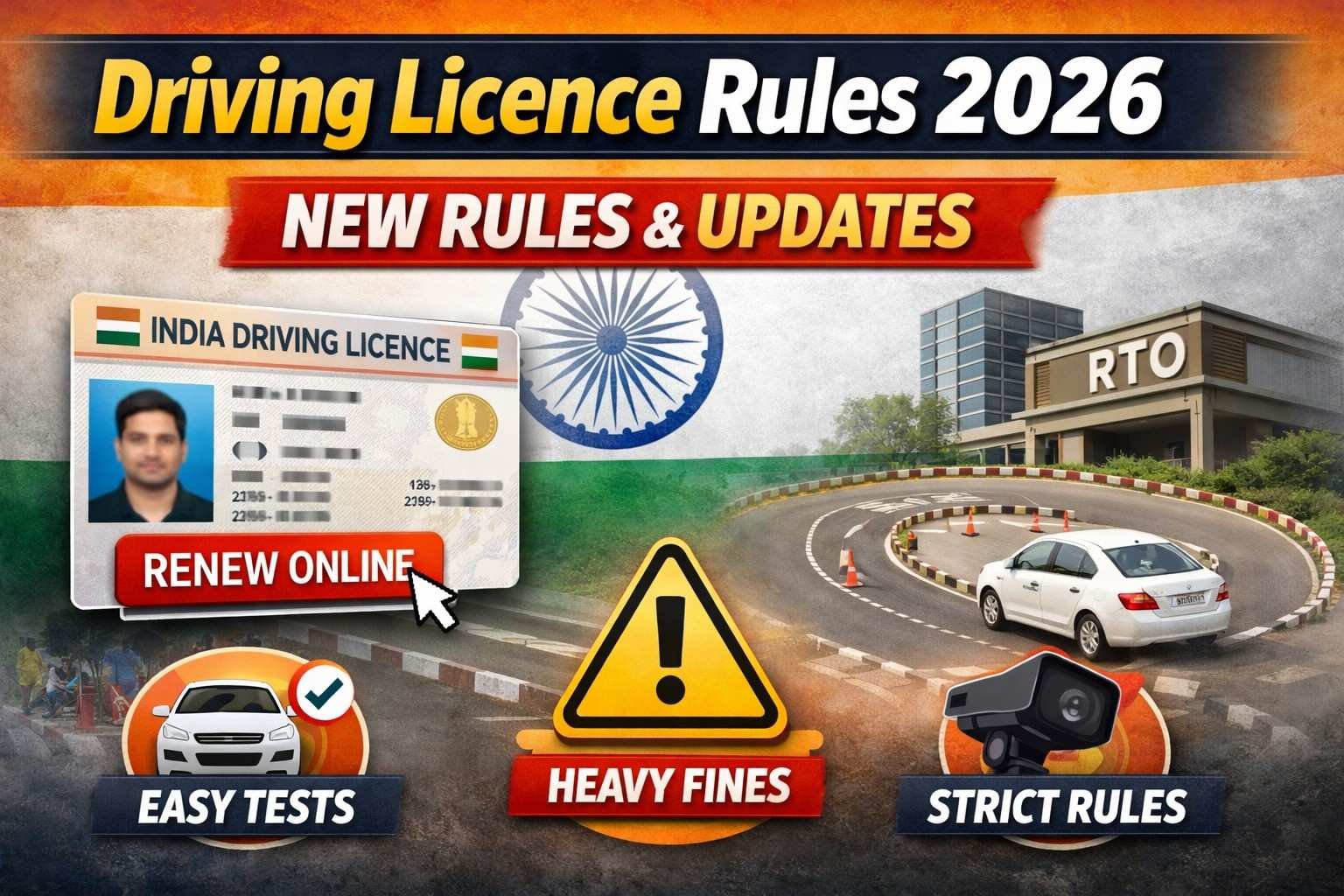
Driving Licence Rules 2026: As we move into 2026, several changes to driving licence procedures and enforcement are taking shape across India. These updates aim to make the licensing process easier, strengthen road discipline, and improve safety for all road users. Whether you’re applying for a new licence, renewing an existing one, or simply want to stay compliant, here’s a complete guide to what’s new and what’s staying the same this year.
What Is New in the Driving Licence Rules 2026?
The updated driving licence rules aim to simplify processes while making drivers more responsible. Here are the major highlights:
- More services are available online
- Driving tests allowed at authorised private centres
- Easier renewal process for valid licences
- Stricter penalties for invalid or expired licences
- Better monitoring of repeat traffic offenders
These changes apply across India under the Motor Vehicles framework.
Simplified Testing Process
One of the biggest shifts in the driving licence system is how the practical test is conducted. Applicants will no longer have to visit the Regional Transport Office (RTO) just for the driving test. Instead, tests can be taken at authorised private training centres recognised by the government. These centres follow standard procedures and feed results directly into the national system.
This change is intended to cut waiting times, reduce crowding at RTOs, and offer more flexible testing schedules for learners.
Online Services and Renewals Made Easier
Renewing a driving licence has become much more user-friendly. Through the national Sarathi Parivahan portal, licence holders can apply for renewal online up to 30 days before expiry. If you miss this window and your DL has expired by more than a year, you may be asked to take a fresh driving test.
The portal also lets drivers check application status, pay fees, and get updates without visiting the RTO in person. Smart card licences continue to be delivered by post after processing.
Validity and Age-Linked Rules
The standard validity of a driving licence for non-transport vehicles remains up to 20 years or until the holder turns 40, whichever comes first. After age 40, licences are typically reissued with shorter validity periods, such as 10 years or 5 years. This ensures regular checks on driver fitness, especially for older applicants. Parivahan
Penalties and Enforcement Are Getting Stricter
While the application and issuance process is becoming smoother, enforcement of licence-related rules is tightening. Driving without a valid licence can attract higher fines, and repeat traffic violations could lead to licence suspension or cancellation, especially under current proposals to amend the Motor Vehicles Act.
Some regions are also introducing stricter testing standards. For example, parts of Uttar Pradesh are using automated testing tracks with precise performance criteria for learners before they qualify for a permanent licence.
Road Safety and Vehicle-Related Rules Still Evolving
Although not directly part of licence issuance, related traffic rules now affect drivers across India from January 2026. For example:
- All new two-wheelers must be fitted with Anti-Lock Braking Systems (ABS), regardless of engine size. This is intended to improve safety and reduce accident severity.
- Enforcement of compliance with safety gear, documentation, and vehicle standards is stronger, and non-compliance can indirectly affect licence status through fines or enforcement action.
Read More: UTS App Is Being Phased Out: Why Indian Railways Is Shifting Users to the New RailOne App
Tips for Licence Applicants and Holders
Here are some practical pointers for anyone dealing with driving licences in 2026:
- Apply early: You can start your licence renewal 30 days before expiry.
- Use online portals: Most routine services like status checks, payments, and application submissions can be done online.
- Choose authorised training: Selecting a recognised centre for your practical test can save trips to the RTO.
- Keep documents updated: Valid ID, address proof, and medical declarations matter for both new licences and renewals.
- Follow traffic rules: Penalties for violations are increasing, and repeated offences could impact your licence standing.
Final Take
The driving licence framework in India is evolving toward convenience and transparency. Testing at authorised centres, streamlined online services, and clearer validity rules should make the process less cumbersome. At the same time, stricter enforcement and updated safety requirements remind drivers to stay compliant and safe on the road.
