
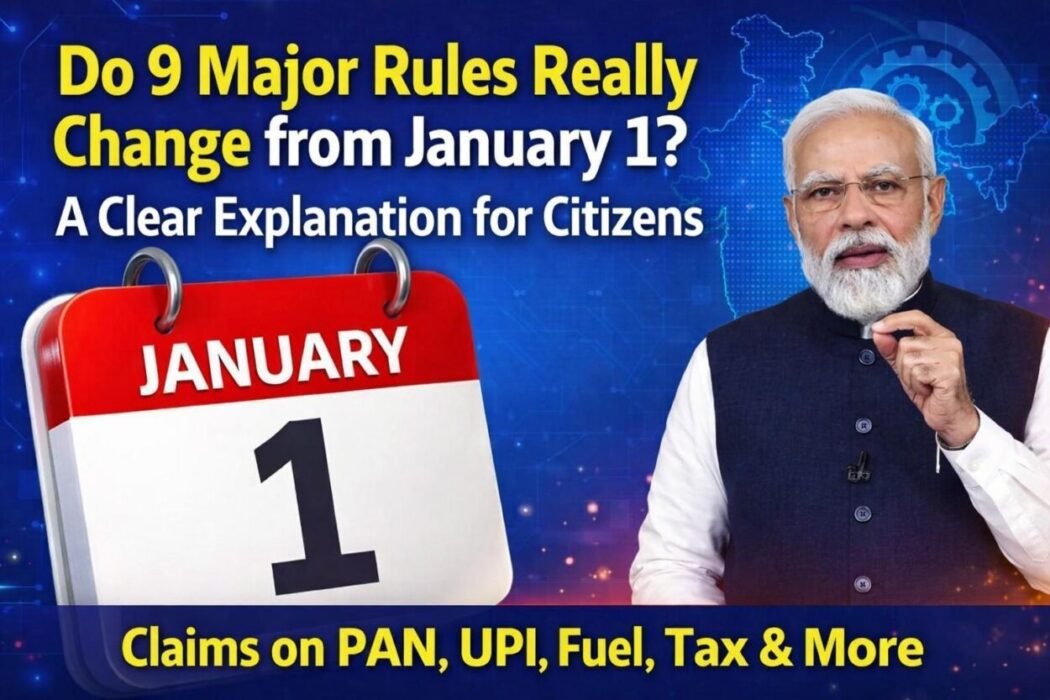
Do the 9 Major Rules Really Change? As the new year approaches, several social media posts and graphics are being widely shared claiming that nine major changes will come into effect from 1 January, impacting every citizen. While some of these points are based on existing rules or routine processes, others are either speculative or presented without proper context.
This article explains what is actually changing, what is already in force, and what citizens should realistically expect, in simple terms.
1. PAN–Aadhaar Linking: Already Mandatory
One of the most highlighted claims is that PAN–Aadhaar linking will become mandatory from 1 January, and PAN cards may be deactivated.
Reality:
PAN–Aadhaar linking has already been mandatory for most taxpayers. If PAN is not linked with Aadhaar, it can become inoperative, restricting financial transactions such as filing income tax returns or opening bank accounts. This is not a new rule starting from 1 January, but an ongoing requirement.
2. Stricter Rules for UPI, SIM, and Messaging Apps
The post claims stricter controls on UPI, SIM cards, and messaging apps to curb digital fraud.
Reality:
Banks, telecom operators, and regulators regularly update KYC and security norms to prevent fraud. While tighter monitoring is expected to continue, there is no single nationwide rule automatically coming into force on 1 January unless officially notified.
3. FD and Loan Interest Rate Changes
It is claimed that fixed deposit (FD) and loan interest rates will change from 1 January.
Reality:
Interest rates depend on RBI policy decisions and bank-specific reviews. They do not change automatically because of a new calendar year. Any changes will be announced individually by banks.
4. LPG Cylinder Price Review
The graphic suggests a change in LPG cylinder prices.
Reality:
LPG prices are reviewed periodically, often monthly. Price increases or decreases depend on global fuel prices and government policy. This is a routine process, not a special New Year rule.
5. CNG, PNG, and ATF Price Revisions
Claims have been made about revisions in CNG, PNG, and aviation fuel prices.
Reality:
These fuel prices are revised regularly by oil marketing companies based on market conditions. Such revisions are normal and ongoing, not tied specifically to 1 January.
6. New Income Tax Rules and ITR Forms
The post mentions preparation for new income tax rules and new ITR forms.
Reality:
New Income Tax Return (ITR) forms are usually notified before the start of the assessment year. While updates are expected every year, no sudden tax rule change begins on 1 January unless officially announced.
7. Eighth Pay Commission
Another claim suggests that work on the Eighth Pay Commission will start.
Reality:
As of now, there is no official confirmation regarding the formation or start of the Eighth Pay Commission. The government will formally notify any such development.
8. New Rules for Farmers
The post mentions new farmer-related rules, including Unique Farmer ID and faster insurance reporting.
Reality:
Several farmer welfare initiatives are under implementation, but rules and timelines vary by scheme and state. There is no single nationwide change applicable to all farmers from 1 January.
9. Vehicle Price Increase
It is claimed that vehicle prices may rise by up to 5 percent.
Reality:
Automobile manufacturers often revise prices at the beginning of the year due to rising input costs, regulatory compliance, or inflation. However, price hikes are company-specific and not guaranteed.
Final Verdict: Awareness, Not Alarm
Most points in the viral post are a mix of:
- Existing rules
- Routine price revisions
- Possible future changes
- Speculation without official dates
There is no single notification confirming nine major changes for everyone from 1 January. Citizens are advised to rely only on official government announcements, RBI circulars, and verified notifications.
What Citizens Should Do
- Verify information from official sources
- Avoid panic based on viral graphics
- Stay updated through trusted news platforms
Being informed is important, but clarity matters more than clickbait.
