
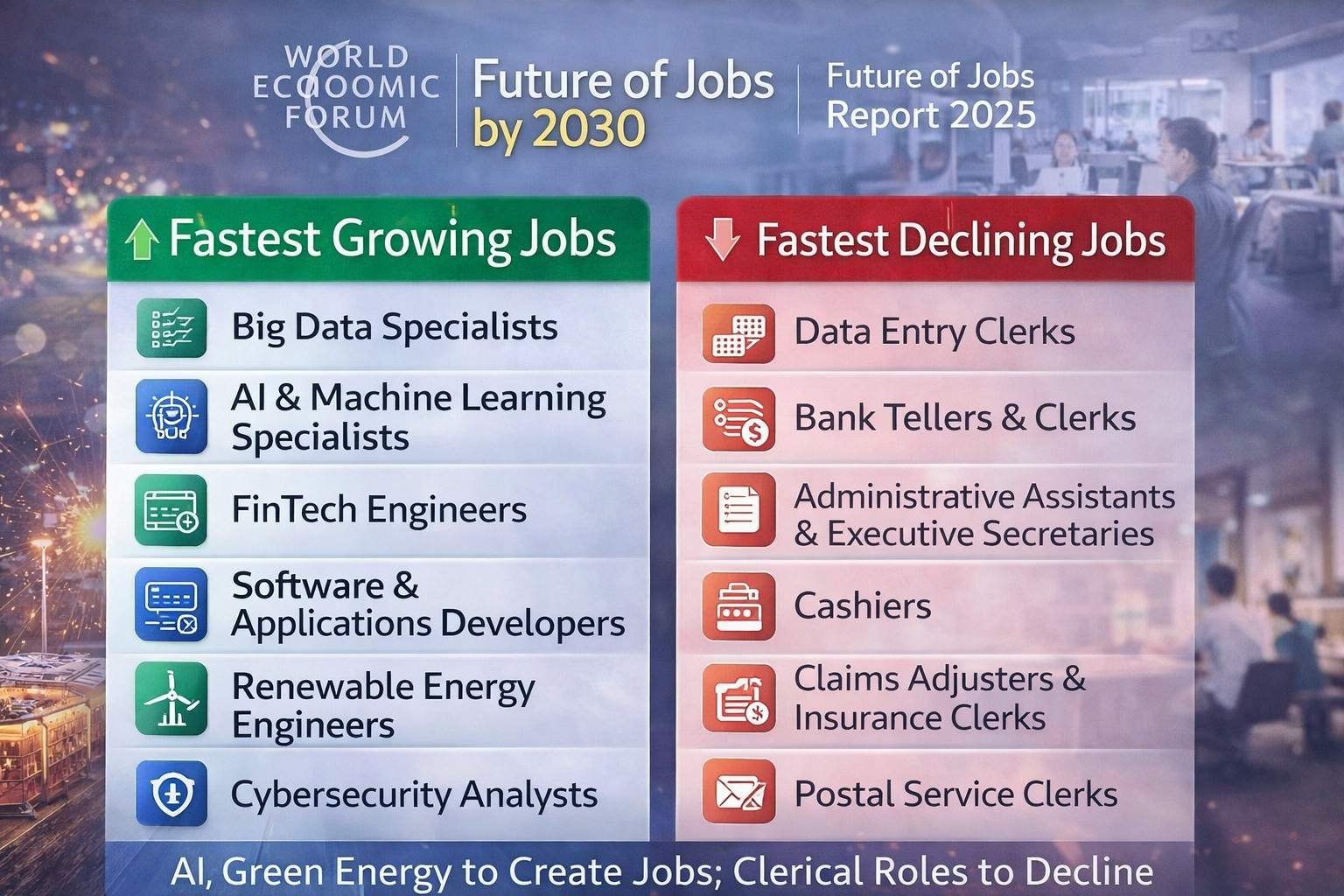
Future of Jobs by 2030: The World Economic Forum (WEF) has released new insights from its Future of Jobs Report 2025, highlighting the world’s fastest-growing and fastest-declining job roles by the year 2030. The findings reveal a dramatic transformation of the global workforce, driven by artificial intelligence, automation, green energy, and digital transformation.
According to the report, demand for technology and data-driven professionals is expected to surge, while traditional clerical and administrative roles are likely to shrink rapidly.
Fastest Growing Jobs by 2030
The WEF report identifies technology, data, and sustainability as the biggest employment growth engines over the next five years. The top fastest-growing roles include:
- Big Data Specialists
- AI and Machine Learning Specialists
- FinTech Engineers
- Software and Applications Developers
- Security Management Specialists
- Data Warehousing Specialists
- Autonomous and Electric Vehicle Specialists
- UI and UX Designers
- Light Truck or Delivery Drivers
- Internet of Things (IoT) Specialists
- Data Analysts and Scientists
- Environmental Engineers
- Information Security Analysts
- DevOps Engineers
- Renewable Energy Engineers
These roles reflect the accelerating shift toward artificial intelligence, cybersecurity, digital platforms, climate action, and clean energy technologies.
Fastest Declining Jobs by 2030
The report also warns that several routine and clerical occupations are at high risk of decline due to automation and digitalization.
The most vulnerable roles include:
- Postal Service Clerks
- Bank Tellers and Related Clerks
- Data Entry Clerks
- Cashiers and Ticket Clerks
- Administrative Assistants and Executive Secretaries
- Printing and Related Trades Workers
- Accounting, Bookkeeping and Payroll Clerks
- Material Recording and Stock-Keeping Clerks
- Transportation Attendants and Conductors
- Door-to-Door Sales Workers and Street Vendors
- Graphic Designers
- Claims Adjusters, Examiners and Investigators
- Legal Officials
- Legal Secretaries
- Telemarketers
Many of these jobs are being replaced or reduced by AI systems, self-service tools, automation software, and digital platforms.
Why Tech and Green Jobs Are Rising
The WEF report highlights several global trends behind this transformation:
- Rapid adoption of artificial intelligence and automation
- Expansion of digital services and cloud computing
- Growth in cybersecurity threats, increasing demand for security experts
- Rise of electric vehicles and renewable energy
- Explosion of data generation, boosting demand for data scientists
- Shift toward smart devices and IoT systems
These trends are reshaping how companies hire and what skills they value.
What This Means for Students and Job Seekers
The report sends a clear message: future careers will be tech-driven and skill-intensive.
To stay relevant in the job market, individuals should focus on:
- Learning AI, data science, cybersecurity, and cloud technologies
- Building skills in software development and DevOps
- Gaining exposure to green energy and sustainability sectors
- Developing digital design and user experience skills
- Continuously reskilling and upskilling
Traditional clerical and repetitive jobs are likely to continue shrinking unless workers retrain for new roles.
Big Warning for Governments and Education Systems
The WEF report also raises concerns about a growing skills gap. Without large-scale reskilling programs, millions of workers may struggle to adapt to the changing job market.
Experts urge governments, universities, and employers to:
- Update education curricula
- Expand vocational and digital training
- Invest in lifelong learning programs
- Support job transitions into emerging sectors
Read More: Hindustan Copper Limited Recruitment 2026 | Apply Now –Diploma/ITI/10th Pass

1 thought on “Future of Jobs by 2030 | AI and Tech Roles to Boom, Clerical Jobs Face Sharp Decline, Says WEF Report”
Comments are closed.